Hearing Emotions: The Unseen Power of Sound Design
In a constantly changing media landscape, sound design is one of the most powerful tools for engaging an audience’s memory...

Leveraging technology, innovation, and human experiences to captivate your audience.
You publish an episode, hit play on your phone, and it’s noticeably quieter than the show you were just listening to. Or worse, your intro music blasts while the conversation mumbles. That’s a loudness problem, and it’s one of the fastest ways to make a podcast feel amateur. Here’s what podcast loudness numbers mean, what the platforms actually ask for, and the target we use on every show we mix.
LUFS (Loudness Units relative to Full Scale) measures how loud audio sounds to people, not just how high the waveform peaks. It’s defined by the international standard ITU-R BS.1770. You’ll also see LKFS. According to the Audio Engineering Society, it’s the same unit with a different name.
For podcasts, the number that matters is integrated loudness: the average loudness of the whole episode, start to finish.
True peak (dBTP) is the highest point your audio reaches once it’s converted back to analog, including peaks that sneak in between digital samples. Those hidden peaks can distort when your file gets encoded to MP3 or AAC for streaming, which is why every serious spec sets a true peak ceiling below 0.
For contrast, other formats play by different rules. Audiobooks on ACX/Audible are measured in RMS (−23 to −18 dB, peaks below −3 dB). U.S. broadcast TV targets −24 LKFS, and European broadcast (EBU R128) targets −23 LUFS. Delivering a podcast at broadcast levels is a common reason shows sound quiet.
Our default for podcasts is −16 LUFS integrated with true peak at or below −1 dBTP, delivered in stereo. That matches Apple, the strictest published podcast spec, and sits right where listeners expect a spoken-word show to play.
One gotcha: mono files. The AES notes that a mono file played back through two channels measures about 3 LU louder than the file itself. If you deliver mono, your engineer should account for it. (Apple also requires WAV and FLAC uploads to be stereo.)
You can slam any episode to −16 LUFS with a limiter. That doesn’t make it sound good. The real goal is consistency: hosts and guests at the same perceived level, music beds that sit under the conversation, and ad reads that don’t jump out.
The AES puts it plainly: inconsistent loudness annoys listeners, and nobody likes reaching for the volume knob. Spotify’s ad guidelines make the same point: when listeners feel the need to adjust volume, they’re more likely to skip.
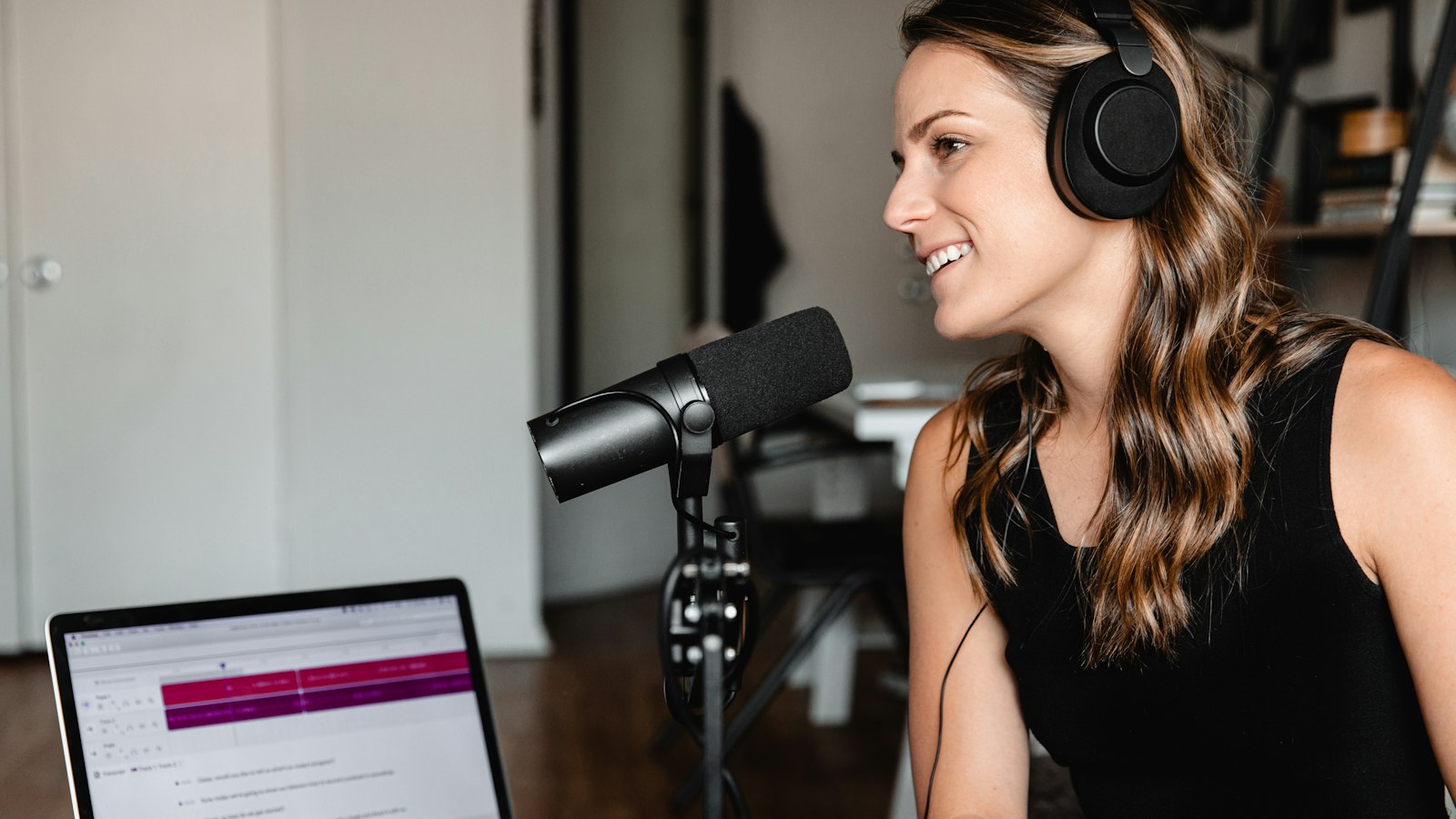
ATAM Audio handles podcast editing, cleanup, mixing, and mastering to platform standards, so every episode sounds polished and consistent. Let’s talk about your show.
In a constantly changing media landscape, sound design is one of the most powerful tools for engaging an audience’s memory...
We’ve been crafting sonic magic behind the scenes with our friends at Matchstic, the branding powerhouse known for guiding companies...
Clean audio is what separates content people finish from content they skip. Whether you’re producing a podcast, a video series,...